Why Toast Smells Different from Bread
Why toast smells different from bread comes down to browning: learn what a pale or deeply toasted slice adds, and choose the right level for your meal.
The common mistake with toast is to judge it only by crunch. That misses the aroma and flavour created as bread browns, and can leave a delicate topping overwhelmed or a hearty slice tasting flat. Why toast smells different from bread is a useful question when choosing how far to take a slice.
A pale slice smells mostly of its original bread: its grain, fermentation and any ingredients such as seeds or butter. Toast brings another layer. Surface heat drives browning reactions that produce nutty, roasted and savoury aromas, while the dry surface becomes crisp. The right choice depends on what the bread will do on the plate.
Choose by bread style
For soft white sandwich bread, use a light toast when the filling is mild or creamy. A little colour adds a warm, wheaty smell without making the slice compete with cucumber, egg or a soft cheese. If the filling is strongly seasoned, a more browned slice can hold its own.
Dense sourdough, rye and seeded loaves can take deeper colour. Their own tang, graininess or toasted seeds give the browning aromas something to meet, so the result can taste fuller rather than merely dry. Watch the edges: a thin heel darkens before the middle of a thick slice.
For enriched bread containing egg, milk or sugar, stop at golden. Those ingredients encourage quick browning, so a setting that suits plain bread may take brioche or a sweet loaf too far. Choose a lower setting and check the first slice rather than relying on the toaster dial alone.
Match the colour to the loaf, not just the appliance.
Choose by what goes on top
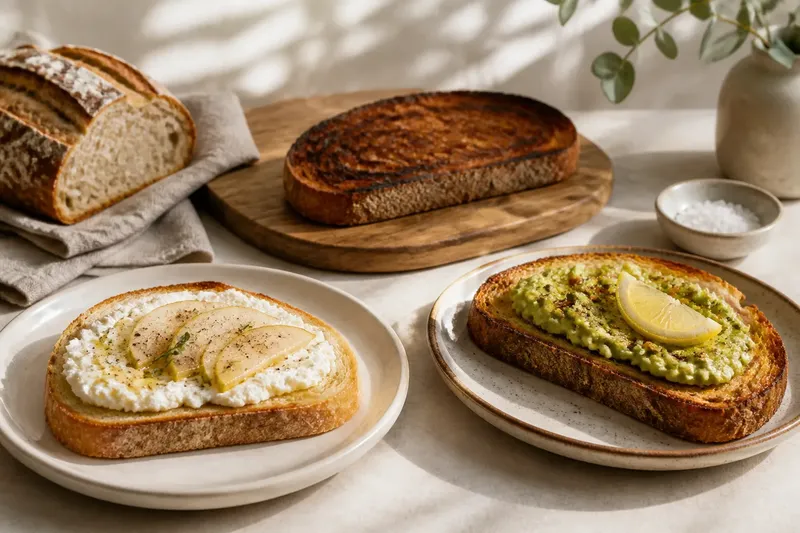
Use pale or lightly toasted bread beneath toppings with subtle flavours. Fresh ricotta, ripe pear or a mild spread can be lost under a strong roasted crust. A gentle toast gives a little structure while leaving the topping in front.
Choose a deeper toast for toppings that are rich, salty or savoury. It can balance soft butter, mature cheese or mashed beans with a more pronounced roasted note. For a topping that needs to stay in place, let the slice cool briefly before spreading; the surface will be less steamy and less likely to soften at once.
Say you are making an invented breakfast of thick sourdough with mashed avocado and a squeeze of lemon. Starting with a pale slice, you could toast the next one until its surface is evenly golden, then add the same topping. The expected observable result is a crisp edge and a more roasted smell, while the lemon and avocado remain distinct; a much darker slice would bring a stronger, potentially competing bitterness.
Choose by serving time
If toast will be eaten straight away, you can aim for a crisp, well-browned surface. If it must wait while eggs are cooked or tea is poured, choose a lighter colour. Toast continues to lose moisture as it sits, and a very dark slice can become hard before it reaches the table.
For toast that will carry a wet topping, a firm golden surface is often a useful middle ground. It resists softening better than a barely warmed slice without making each bite brittle. Add tomatoes, mushrooms or other moist toppings close to serving rather than leaving them on the bread while you finish other tasks.
When serving several people, toast similar slices together and keep them upright or loosely spaced. Stacking traps steam between slices, which dulls the crisp surface and mutes its aroma. A rack or an open plate lets the heat escape.
What changes during browning?
Why does toast smell nutty?
As the surface heats and dries, browning reactions between sugars and amino compounds create new aromatic molecules. Some smell nutty, malty or roasted, giving toast a scent that plain bread does not have.
Does darker toast always taste stronger?
More browning usually brings a more pronounced roasted flavour, but darkness alone is not a reliable measure of pleasantness. Once the surface becomes very dark, bitter and burnt notes can crowd out the bread’s own flavour.
Why is the centre still soft?
The exposed surface dries and browns before the inside loses much of its moisture. That contrast gives toast its crisp outside and tender centre; a thin slice or prolonged heating can make the interior dry as well.
Can a pan make toast smell different?
Yes. A dry frying pan can brown one side at a time and may create a more uneven, direct-crisped surface than a toaster. Butter in the pan adds its own aroma and browning, so it changes the flavour rather than simply copying plain toast.
Choose a cooking method
A toaster suits quick, even slices and makes it easy to compare a light setting with a darker one. A grill is useful for irregular or wide pieces, but the exposed surface can colour quickly; stay nearby and turn the bread when the first side reaches the shade you want. A dry pan gives closer control over one face at a time, while a little butter makes the result richer and less like plain toast.
For any method, use the bread’s colour and aroma as cues. Remove it when it smells pleasantly warm and roasted, before the scent turns acrid. Toaster settings vary, and thick, moist or enriched bread behaves differently from a thin, dry slice, so check the loaf and appliance instructions where relevant.
The useful distinction in why toast smells different from bread is not simply soft versus crisp. A pale slice keeps the loaf’s original character in focus; a browned slice adds a new roasted layer. Pick the point between them that suits the bread, topping and moment you are serving it.