Fresh Herbs or Dried: Choosing by the Job
Fresh herbs or dried herbs? Match each form to the dish’s heat, timing and texture for clearer flavour and fewer limp leaves or woody bites.
The common mistake with fresh herbs or dried is swapping one for the other without changing when it goes into the pan. That can leave a quick-cooked dish with little herbal flavour, or a delicate sauce crowded with tough, concentrated flecks. Choose by the job: how much heat the herb will meet, how long it has to soften, and whether its texture belongs in the finished food.
Start with the cooking time
Dried herbs are often the better fit for food that simmers, braises or roasts for a while. Drying removes moisture and leaves a concentrated, brittle herb that can release its flavour gradually as it warms and absorbs liquid. Add it early enough to soften, but not so early that a long cook dulls its aroma.
Fresh herbs usually suit short cooking or a finishing touch. Their leaves carry moisture and volatile aromas that can fade in sustained heat. Stir chopped parsley or coriander through a stew just before serving, for instance, and the herbs retain a fresher scent than if they had simmered from the start.
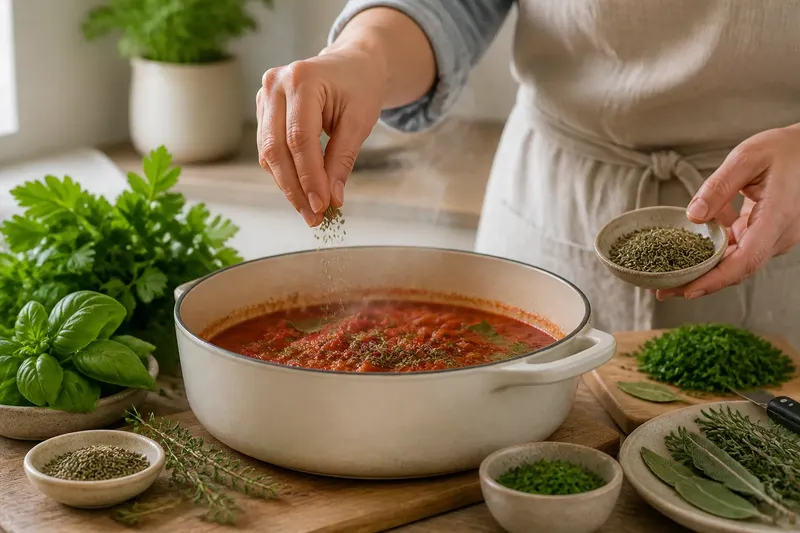
For a dish with both a long cook and a fresh finish, use the forms for separate purposes. Dried oregano can season a tomato sauce as it simmers; fresh basil can be torn over the bowl at the end. That is not needless duplication: each addition does a different job.
Match intensity to the dish
Dried herbs can taste more concentrated by volume, though their strength depends on how they were dried and how long they have sat in the cupboard. Fresh herbs vary too, according to the leaf, stem and condition. Treat a recipe’s stated amount as a starting point, then taste when the herb has had time to mingle with the food.
For an invented example, say you are making a quick pan of mushrooms with butter and lemon. A small pinch of dried thyme added while the mushrooms cook has time to soften, while chopped fresh parsley stirred in after the pan comes off the heat adds a bright, leafy finish. The observable difference should be in the layers of flavour and texture, not a claim that one form is always stronger.
Some herbs retain a recognisable character in either form; others change noticeably. Dried rosemary can be piney and firm, while fresh rosemary offers a more resinous aroma and can be easier to remove in a sprig. Dried mint often tastes more rounded and earthy than fresh mint. Choose the flavour you want rather than assuming the dried version is simply fresh flavour with less water.
Fresh herbs or dried?
Which herbs work well dried?
Oregano, thyme, rosemary, sage and bay are common choices for dried storage because their flavours can suit soups, sauces and slow-cooked dishes. Check the jar’s aroma before using it: if it smells faint, adding more may give dusty texture without much lift.
Which herbs are best fresh?
Parsley, coriander, dill, chives and basil are often most appealing fresh, especially when their colour, fragrance or tender texture is part of the dish. They can still be cooked, but prolonged heat may soften their defining freshness.
Can fresh and dried herbs be swapped?
Sometimes, but the result may differ in texture and aroma as well as strength. If swapping, begin with a modest amount of dried herb in place of fresh, or use more fresh herb than dried, then adjust by tasting rather than relying on a fixed conversion.
When should herbs go into a dish?
Add dried herbs during cooking when they need time in moisture or fat to soften and disperse. Add tender fresh herbs near the end, or at the table, so their aroma and colour remain clear.
Think about texture
Herbs are ingredients, not just flavouring. A spoonful of fresh dill can make a potato salad feel leafy and tender; dried dill may season it without providing that same texture. Conversely, a dried herb can blend into a thick stew where large fresh leaves might feel out of place.
Consider the cut as well as the form. Chop fresh leaves shortly before using them to limit bruising and darkening. Strip tough stems from herbs such as parsley or coriander if their texture would distract, but tender stems can be chopped into a salsa or dressing. For dried rosemary or sage, crush the leaves between your fingers or in a mortar if their fragments seem too coarse.
Whole bay leaves are a special case: they season liquid while cooking but are usually removed before serving. Do not use a dried herb’s small, sharp fragments as a direct substitute for a generous handful of soft leaves where those leaves are meant to be eaten.
Choose by cooking method
- Long simmer: Start with dried thyme, oregano or bay, then taste towards the end. Add fresh parsley or basil only if you want a brighter finish.
- Quick sauté: Use fresh herbs near the end, or briefly warm sturdy dried herbs in the cooking fat so their flavour can spread without dominating.
- Cold dressing: Fresh chives, parsley or mint bring a distinct leafy character. Dried herbs can work, but give them time to soften in the dressing before serving.
- Roast vegetables: Sturdy dried herbs can season the vegetables through the cooking. Add tender fresh leaves after roasting to avoid wilting them unnecessarily.
- Finishing garnish: Choose fresh herbs when you want visible colour, fragrance and a soft bite. Skip the garnish if it adds no useful flavour or texture.
When a dish includes acid, such as lemon juice or vinegar, consider adding fresh herbs after the main cooking. Their aroma can stay more noticeable, and the leaves are less likely to look tired in the finished dish.
Store each form well
Keep dried herbs sealed in a cool, dark cupboard, away from the cooker’s steam and heat. Rub a little between your fingers and smell it before use. If the aroma is barely there, choose another herb or use fresh instead; simply adding a larger heap may make the dish gritty or unbalanced.
For fresh herbs, trim the stem ends and store them in a way suited to the herb. Tender bunches such as parsley and coriander can often sit upright in a glass with a little water, loosely covered and chilled; basil is usually better kept at room temperature because cold can mark its leaves. Use clean, dry leaves for storage and remove any that turn slimy.
For a small amount you cannot use soon, chop the leaves and freeze them in a little water or oil in an ice tray. Frozen herbs lose some crispness, so save them for cooked dishes rather than salads or garnishes.
A simple choice
Choose dried herbs when a dish cooks long enough to soften them and you want flavour woven through the food. Choose fresh herbs when aroma, colour or a tender leafy bite should remain distinct. If both qualities matter, use a dried herb during cooking and a fresh one at the end.
For fresh herbs or dried, make the final decision at the point of use: smell the herb, consider the heat still to come, and ask whether the leaves should disappear into the dish or remain noticeable. That quick check is more useful than treating a substitution ratio as a rule.