A Pantry Supper Built Around One Tin
Build a pantry supper around one tin by matching its flavour and texture with a starch, a crisp contrast and a bright finish from your kitchen.
The common mistake with a pantry supper is opening several tins and hoping they add up to a meal; the result can be salty, soft and oddly flat. A pantry supper built around one tin is easier to balance: choose the canned ingredient first, then give it a starch, a contrasting texture and a bright finish.
Think of the tin as the loudest voice, not the whole conversation. Chickpeas bring gentle nuttiness and a firm bite; sardines contribute richness and salt; tomatoes offer acidity and moisture. Let those qualities guide the rest of the plate, using what is already in the cupboard or fridge.
Read the tin first
Before choosing a side, check what the ingredient brings with it. Is it packed in oil, water, brine or sauce? Does it taste savoury, sweet, acidic, smoky or mild? The liquid may become part of the meal, or it may make a dish too wet or salty.
Drain beans and chickpeas when you want them to sit neatly on toast or in a grain bowl. Keep a little liquid for a soft, spoonable mixture. For oily fish, reserve some packing oil to dress potatoes or greens, but taste it first. Tomato liquid can loosen cooked grains or form the base of a quick pan sauce.
Check the label for salt, seasoning and packing ingredients. Plain beans need different treatment from beans already in tomato sauce. Choose whether to use the liquid by tasting it and considering the dish: leave it out if it tastes too salty, oily or strongly flavoured.
Decide whether the tin should stay distinct or become part of a mash, sauce or warm mixture. Keeping it distinct preserves its texture; breaking it down spreads its flavour through the base.
Choose the starch
The starch makes the supper feel settled and gives the tin somewhere to go. Rice, pasta, bread, potatoes, couscous and polenta all work, but they do different jobs. Pick one that suits the tin’s moisture and texture.
- Rice suits saucy beans, tomatoes or coconut-rich ingredients. Its mildness leaves room for a sharp dressing or chopped pickle.
- Pasta catches oil and soft sauce. Short shapes work well with flakes of tuna or sardines; shells or tubes can hold larger beans.
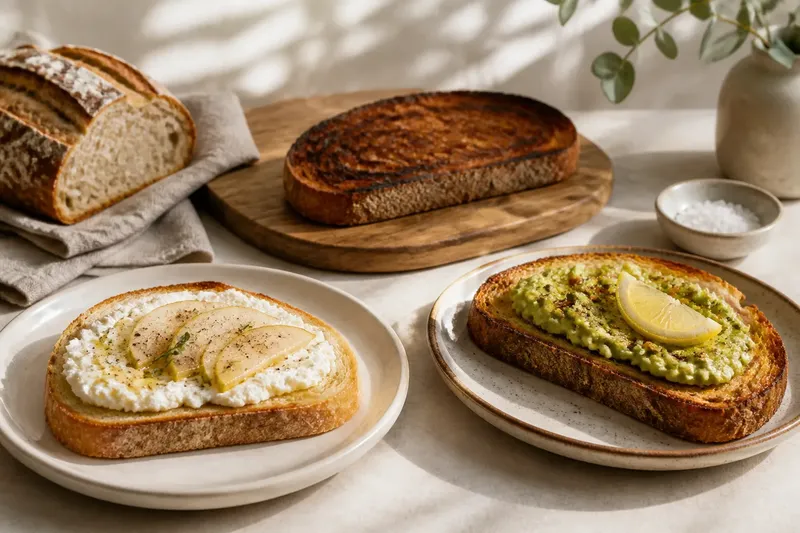
- Toast gives soft ingredients a crisp base. Use sturdy bread for juicy tomatoes or mashed beans, and toast it well so it resists moisture.
- Potatoes bring an earthy base. Warm, crushed potatoes take dressing into their creases; leftover boiled potatoes can be sliced and browned in a pan.
- Couscous or polenta suits a soft, spoonable supper. Add a crisp topping or raw vegetable to avoid a uniformly tender plate.
Keep the starch plain at first. Salt it sensibly, but wait before adding strong spices, cheese or a rich sauce; the tin may already supply those flavours. A restrained base is easier to adjust once everything is together.
Build a texture contrast
Canned foods are often soft, so a second texture helps the plate feel deliberate. Try a crisp element that is raw, toasted or quickly browned, and make sure it is distinct beside the anchor ingredient.
Thinly sliced cabbage, cucumber, radish or celery brings fresh crunch. Toasted breadcrumbs, seeds or chopped nuts add a dry, crisp edge. If the tin is firm, as with chickpeas, a soft element such as mashed potato or a spoonful of yoghurt can provide contrast instead.
Use a small amount and cut it to suit the rest of the meal. Fine cabbage folds into rice; thick cucumber slices work alongside toast. Add crunchy elements just before serving so they do not soften in hot sauce.
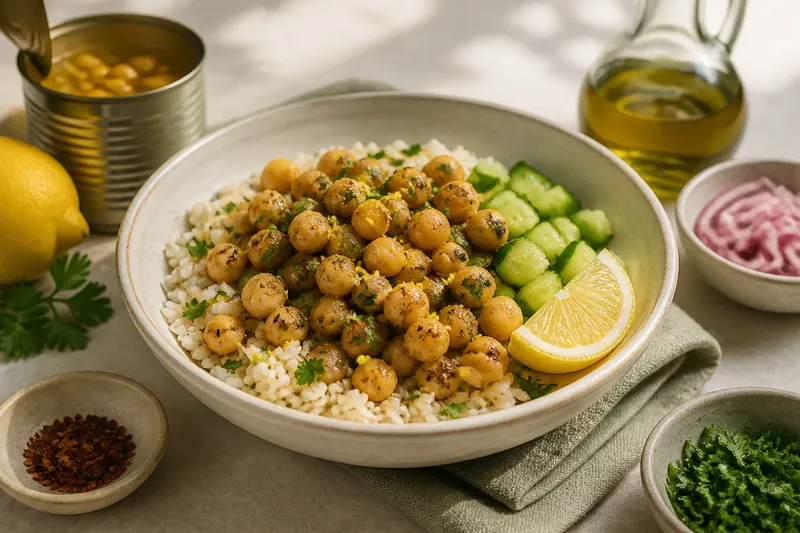
Say you have a tin of chickpeas, leftover rice and half a cucumber. Drain the chickpeas, then warm them with a little oil and cumin. Spoon them over the rice and add diced cucumber and lemon. The expected result is a warm, gently spiced base with a cool, crisp bite; if the chickpeas are already seasoned, leave out the cumin and taste before adding salt.
Finish with a lift
A finishing flavour should sharpen or round out what is already there. Acid is often the simplest lift: lemon or lime juice, vinegar, pickled onions or a spoonful of pickle brine can cut through oil and salt. Add a little, taste, then decide whether the dish needs more.
Freshness can come from chopped parsley, spring onion, coriander or tender leaves. A little grated citrus zest, a chopped gherkin or a few slices of raw onion can also bring a fresh edge. For a warmer finish, try black pepper, chilli flakes, smoked paprika or a dab of mustard.
Match the finish to the tin rather than adding every flavour you like. Lemon suits oily fish and chickpeas; vinegar can wake up beans or lentils; yoghurt can soften spice and richness. If the tin is packed in a seasoned sauce, taste it before choosing another condiment.
Add salt last. Canned ingredients, olives, cheese, stock and pickles can all contribute plenty, so adjust only after the meal is assembled. A squeeze of citrus may make a dish taste lively without extra salt.
Keep the meal balanced
A useful plate has a clear centre and a few supporting parts. The tin should remain recognisable, the starch should carry it, the texture contrast should be easy to spot, and the finish should connect the flavours. If one part is already doing two jobs, do not add another ingredient simply to complete a formula.
For example, sardines in oil can supply both the anchor and some richness for warm potatoes. Add crunchy cabbage for contrast, then use lemon or vinegar to finish. There is no need for another oily topping.
For tomato-packed beans, the sauce may cover the finishing role as well as the anchor. Serve them on toast, add crisp sliced onion or cabbage, and finish with black pepper. If the sauce already tastes sharp, use a spoonful of yoghurt instead of more vinegar.
Let the amount of each part follow appetite and what is on hand. A small tin can dress a modest bowl of rice; a larger serving may need more starch or vegetables. Add the components gradually so the anchor does not disappear under its sides.
Pantry supper questions?
Can I use the liquid from a tin?
Sometimes. Bean liquid can help bind a mash or loosen a sauce, while tomato liquid can season a grain base. Taste it first and leave it out if it is too salty, oily or strongly flavoured for the dish.
What if the tin is already seasoned?
Treat its sauce or seasoning as part of the flavour plan. Keep the starch plain, choose a fresh or crisp contrast, and add salt or spices only after tasting the assembled meal.
How do I make a soft tin feel less heavy?
Pair it with something crisp or raw, then add an acidic finish such as lemon, vinegar or pickled vegetables. Keep rich toppings modest so they do not echo the tin’s softness and weight.
Can a pantry supper be served cold?
Yes, if the starch and tin are suitable to eat cold and have been stored safely. Combine them with a crisp vegetable and a sharp dressing, and keep the components separate until serving if you want the crunch to last.
For a pantry supper built around one tin, let the tin show what the rest of the plate needs instead of building a dish from habit. Keep flexible staples such as rice, pasta, bread, vinegar and something crisp within reach; taste the assembled meal before adding salt or another condiment.